Secure DNS in 2026: DNS Privacy Basics, DoH/DoT, and Common Mistakes
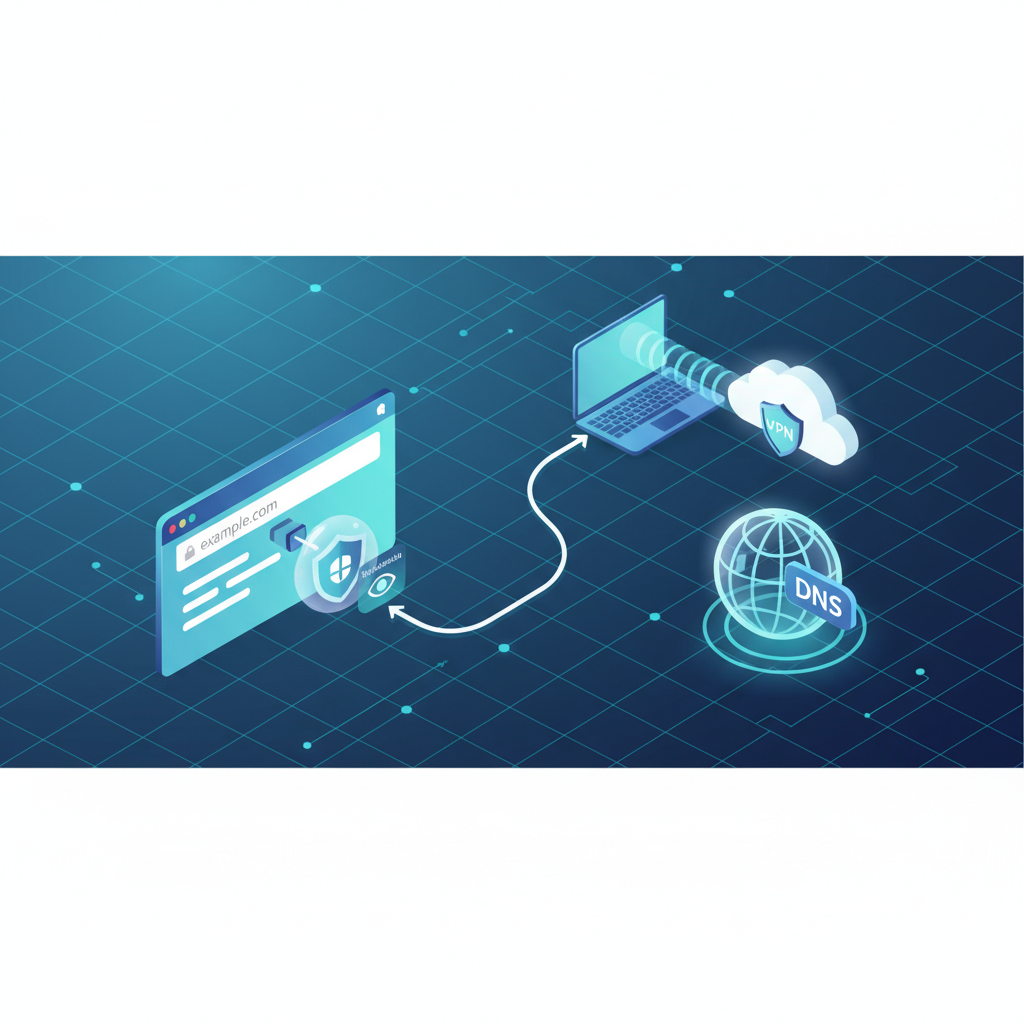
Most people think online privacy starts and ends with a VPN. In reality, privacy often fails at a much quieter layer: DNS. DNS does not get the same attention as cookies or encryption, but it can reveal exactly what you are trying to access—even when everything else is protected.
DNS (Domain Name System) is how your device translates a domain name into an IP address. When you type a website into your browser, DNS is the first step. Without DNS, nothing loads. And because DNS sits at the start of nearly every connection, it becomes one of the most valuable metadata sources on the entire internet.
The privacy problem is simple: if someone can observe your DNS requests, they can often infer what sites you use, when you are active, and how frequently you return. Even if your browsing content is encrypted, DNS can still expose intent and behavior patterns.
In a traditional setup, DNS requests are handled by your ISP’s resolver by default. That means your ISP may have visibility into the domains you request. Even if an ISP does not “read your browsing,” it can still see what services you connect to, which is enough for profiling at scale.
This is why DNS privacy matters even when you use a VPN. A VPN can hide your IP address from websites and reduce destination visibility for your ISP, but if DNS requests escape outside the encrypted tunnel, you leak critical metadata while assuming you are protected. This is known as a DNS leak.
DNS leaks are especially dangerous because they are silent. Users do not notice them. Everything still works. The VPN app says “connected.” But domain lookups happen outside the tunnel, creating a direct connection between your real network and your browsing intent.
This connects directly to the idea of layered privacy. A VPN protects the network path. Browser tools reduce tracking inside the browser. DNS sits in between as a metadata bridge. If you want the full overview of how privacy layers work together, start here: the practical difference between network privacy and browser privacy.
So what does “secure DNS” mean in 2026? It does not mean “a special DNS that makes you anonymous.” It means reducing DNS exposure so domain requests are not trivially visible to local networks or upstream observers. Secure DNS is about minimizing metadata leakage and improving the predictability of your privacy setup.
Two popular technologies often mentioned in DNS privacy are DoH and DoT. DoH stands for DNS over HTTPS. DoT stands for DNS over TLS. Both aim to encrypt DNS queries in transit so they are harder to observe or manipulate on the network.
It is important to understand what DoH/DoT actually change. They encrypt DNS requests between your device and a DNS resolver. They do not eliminate DNS data. They simply protect it while it travels. The resolver itself can still see the queries. This means trust shifts from “my local network can see it” to “my chosen resolver can see it.”
This is why DNS privacy is not only technical, but also a trust decision. You are choosing who handles your DNS data. Some users prefer their VPN’s DNS servers because it keeps routing within one provider. Others prefer independent resolvers for performance or perceived separation. There is no universal answer—only trade-offs.
One of the biggest DNS privacy mistakes is mixing tools without understanding the routing outcome. For example, using a VPN while forcing DNS through a separate resolver can create inconsistent behavior. In some environments, this creates leaks or breaks connectivity. In others, it creates unusual traffic patterns that may trigger extra verification.
This ties into another concept: IP reputation and trust scoring. When your network behavior looks unusual, websites may apply friction like CAPTCHAs or login challenges. If you want to understand why that happens and how IP trust affects access, read this article: why some IPs get blocked or flagged by websites.
Another common mistake is assuming “changing DNS” is a substitute for a VPN. DNS settings can influence privacy and filtering, but they do not encrypt all traffic. They do not hide your IP address from websites. They do not protect traffic contents. DNS is only one layer—and it is not a VPN replacement.
IPv6 adds another complexity layer. In some setups, DNS and routing behave differently under IPv6 than IPv4. If a privacy tool handles IPv4 traffic well but leaves IPv6 partially exposed, you can end up with a split identity: some activity protected, some activity visible. Even when browsing seems normal, correlation signals can leak.
In restricted or controlled networks, DNS can also be manipulated. Some networks enforce “forced DNS” by redirecting DNS traffic regardless of user settings. This can cause silent failures where users think they are using a private resolver, but the network is intercepting requests. Secure DNS helps reduce some of these risks, but it is not always a guarantee.
The practical goal of DNS privacy is consistency. Your setup should route DNS through the intended pathway without fallback behavior, silent overrides, or unexpected splits. Consistency reduces leaks. And in a tracking world built on correlation, reducing leaks is a meaningful privacy win.
Secure DNS is not exciting, but it is one of the highest impact improvements in a privacy stack. Most privacy failures do not happen because encryption is weak. They happen because metadata escapes somewhere small and unglamorous. DNS is one of the most common places where that happens.
If you want a realistic privacy baseline for 2026, treat DNS as a core component. Combine DNS discipline with network-level protection and browser-level tracking controls. That layered approach is what produces privacy that holds up under real conditions—not just in theory.
Disclaimer: This article is for educational purposes only and discusses lawful, responsible privacy practices. It does not provide instructions for bypassing restrictions or violating laws or terms of service.